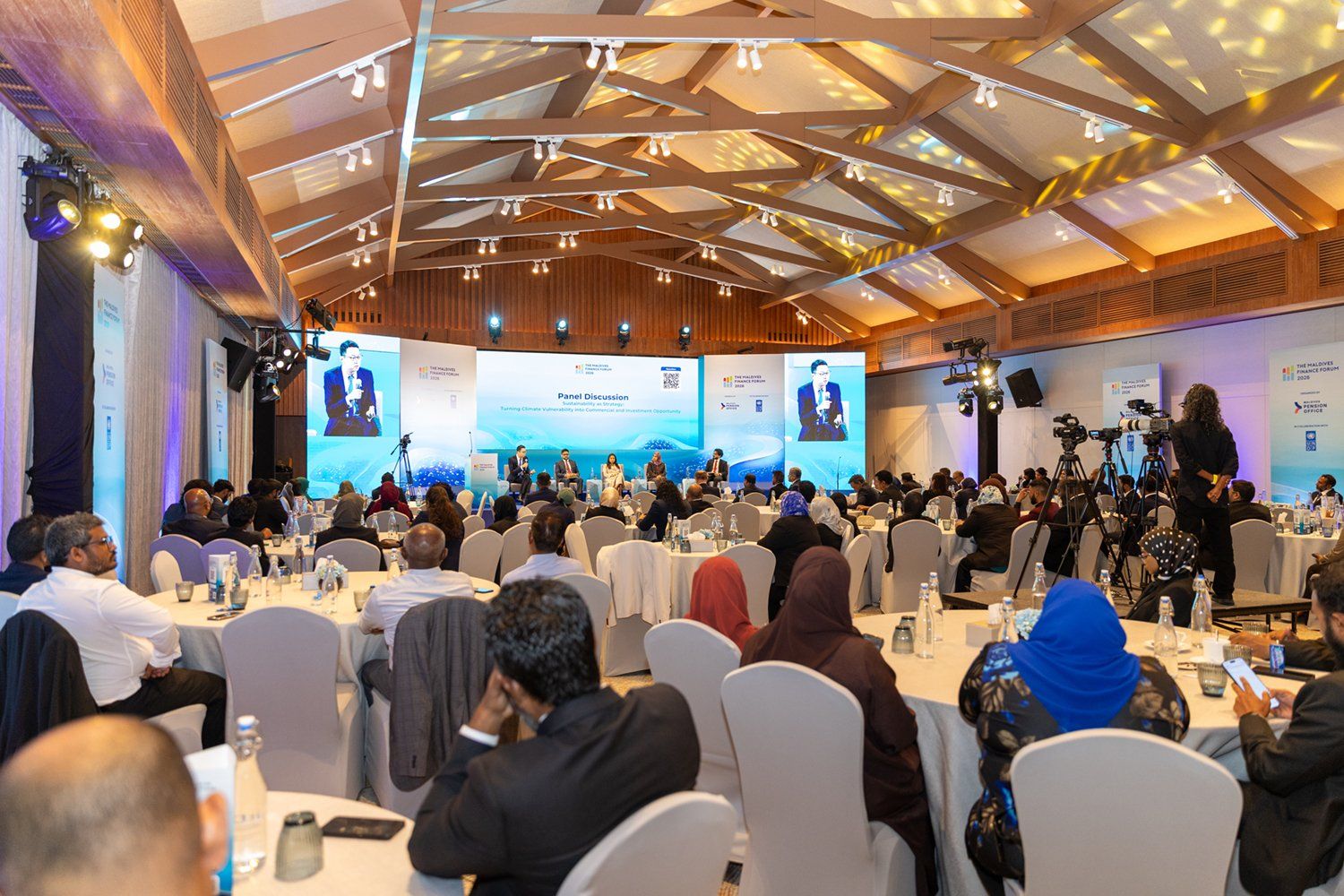
The 13th Maldives Finance Forum, the country's largest financial-sector forum, concluded today at dusitD2 Feydhoo Maldives with a shared message: the policies and the ambition for green finance exist, and the task now is to turn them into projects investors can back.
Organized by the Maldives Pension Office in collaboration with UNDP Maldives, the Forum drew more than 130 participants, including policymakers, financial institutions and industry experts. This year's theme was "Green Finance: Sustainable Investment and Financial Security in the Maldives."
Delivering the keynote address as Chief Guest, Minister of Finance and Public Enterprises Hassan Zareer said climate change is part of a wider national resilience agenda, not only an environmental concern.
"Climate risk is economic risk. And economic risk must be managed," the Minister said. Green finance, he added, "is about making resilience investable."
The Minister said investment is built on confidence, which depends on clear regulations, reliable information and credible opportunities. He cited the National Sustainable Finance Roadmap and the accreditation of the Maldives Finance and Leasing Company as the country's first national Direct Access Entity to the Green Climate Fund.
"Ultimately, progress must be measured not only by the finance we mobilize, but by whether our communities are safer, our infrastructure is stronger, and our people are more financially secure," he said.
In his opening remarks, Pension Office Chief Executive Officer Yazmeed Mohamed noted that around 80 percent of the country's islands lie less than one meter above sea level. Climate shocks, he said, can affect household incomes, businesses, public finances and the stability of the financial system.
He said the Pension Office, the country's largest institutional investor with a fund that crossed MVR 30 billion in net assets this year, is exploring opportunities to support environmental, social and governance initiatives, including climate financing.
"Green investment must never mean compromising financial discipline. Our members' retirement security is paramount," Yazmeed said.
Policies and frameworks alone will not be enough without bankable projects and investor confidence, he added. "We must move from recognizing the opportunity to making it investable."
From frameworks to financing
UNDP Maldives Economist Shuhad Ibrahim opened the program with a presentation on how climate change affects households, businesses and the wider economy, and on the current state of sustainable finance in the Maldives.
In the morning roundtable, "From Frameworks to Market Practice," representatives of the Capital Market Development Authority, the Auditor General's Office and the Ministry of Finance and Public Enterprises discussed the institutional frameworks that sustainable investment requires. They highlighted stronger environmental reporting, monitoring of climate-related expenditure, and financial decisions based on spending and performance data.
In the afternoon, UNDP SDG Finance Policy Adviser Charles Yu shared international experience from small island states. He explained how green and blue bonds, blended finance and concessional financing could be applied in countries such as the Maldives.
The closing panel, "Sustainability as Strategy: Turning Climate Vulnerability into Commercial and Investment Opportunity," examined how the country's natural resources can support viable investments. Discussions covered special economic zones, access to international climate funds, and the introduction of sustainable loans and leasing to the domestic financial market.
The Forum's central aim was to identify how existing policies can be turned into practice and how the large-scale capital that sustainable investment requires can be mobilized. Discussions underscored that a climate-resilient economy depends on government, regulators, financial institutions and private businesses working together.